

VeriXiv’s role in shaping preprint publishing: key insights and trends
In August 2024, F1000 and the Gates Foundation launched VeriXiv, a revolutionary preprint server with enhanced prepublication checks to verify preprints before publication, seeking to address concerns about the research integrity of preprints, especially amid the growth of AI-generated content, whilst still enabling the rapid availability of research.
In the following blog post, we reflect on the successes of VeriXiv since its launch, and the impact VeriXiv has had on the preprint publishing landscape.
The rapid rise of VeriXiv amongst Gates grantees
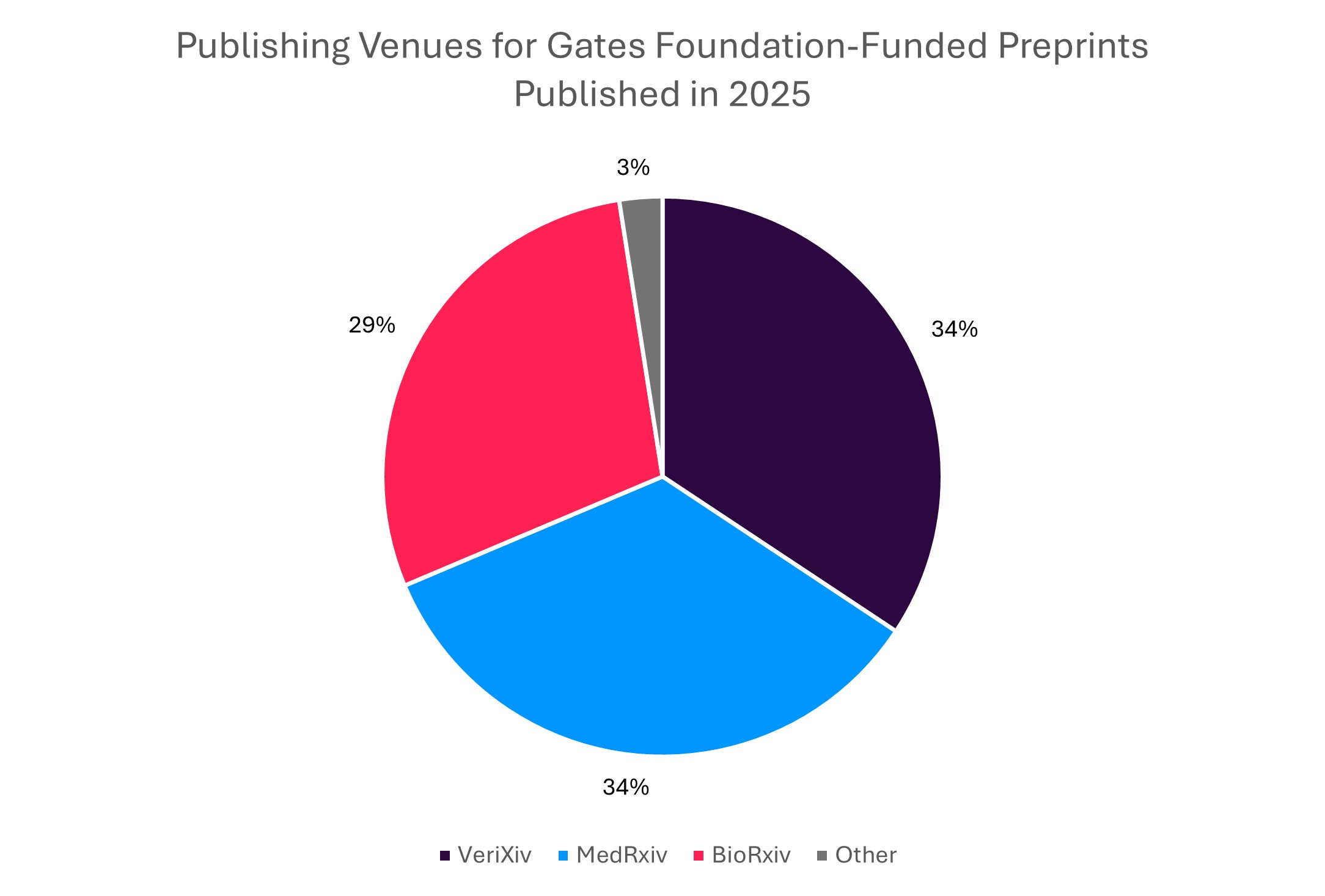
VeriXiv has seen incredible growth since launch and has established itself as the preprint venue of choice for Gates-funded researchers. In 2025, 442 preprints were published on the server, accounting for 34% of all Gates Foundation-funded preprints. This makes VeriXiv equal to medRxiv as the most popular preprint server amongst Gates Foundation grantees, establishing this leading position in just over a year.
The global reach of VeriXiv
VeriXiv’s success is a testament to its global impact, showcasing a diverse network of contributors from around the world. 42% of preprints published on VeriXiv were authored by researchers based in Africa. This was followed by North America (25%) and Europe (15%).
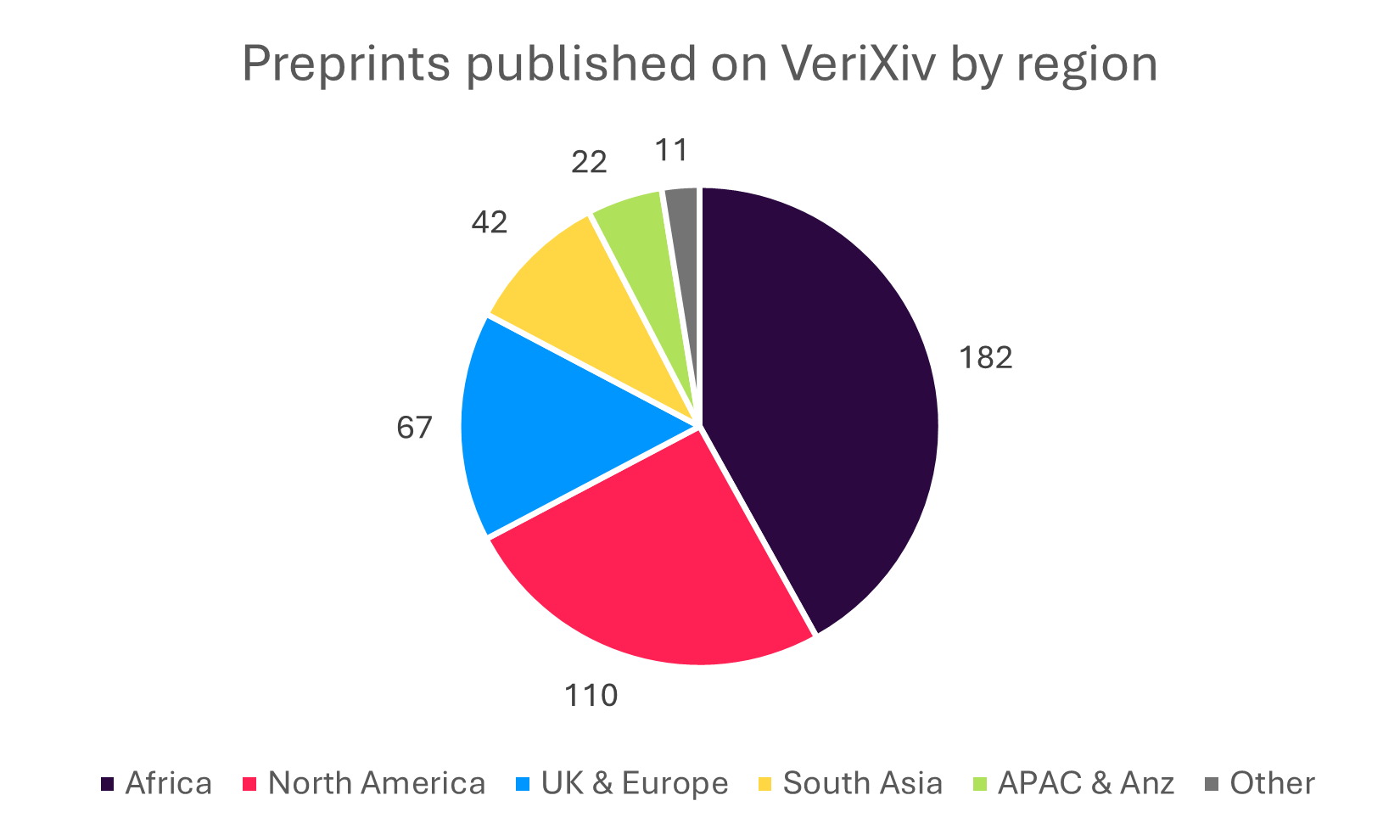
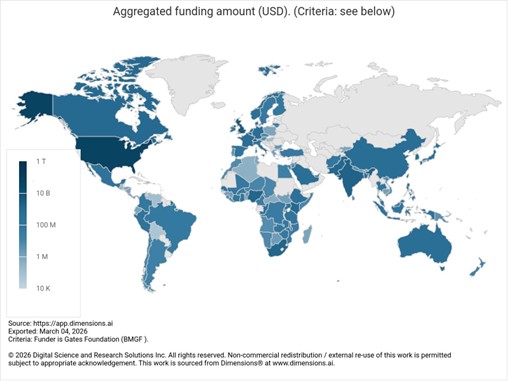
Image: Distribution of Gates Foundation funding
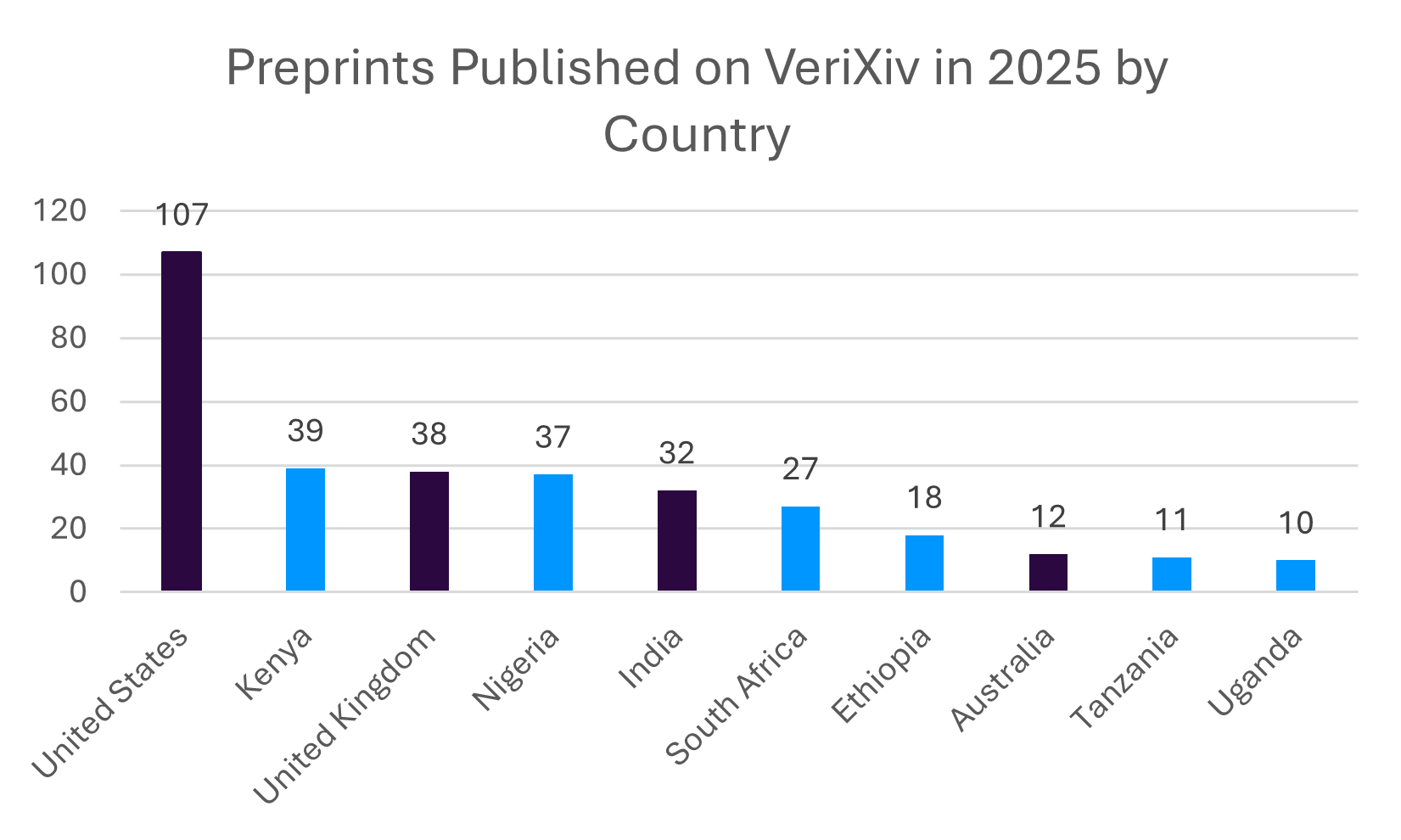
Notably, 6 of the top 10 countries submitting to VeriXiv are African nations: Kenya (39), Nigeria (37), South Africa (27), Ethiopia (18), Tanzania (11), and Uganda (10). This aligns with the Gates Foundation’s mission to promote equitable access to knowledge and encourage research from underrepresented regions. This is an important step forward in encouraging the use of preprints in a region where they’ve traditionally been less common.
Impact of the Gates Foundation Open Access policy
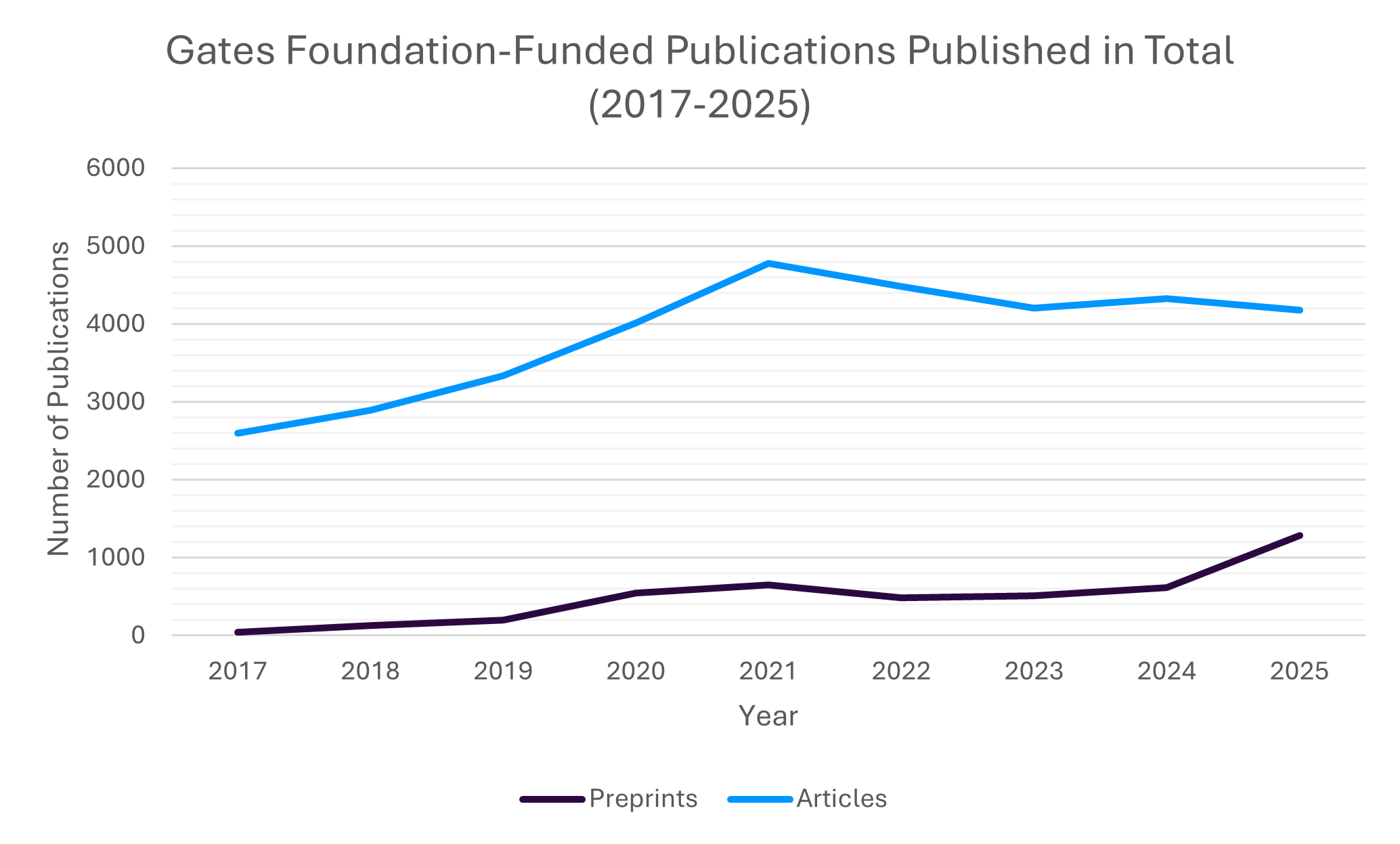
The Gates Foundation’s 2025 Open Access policy, which came into effect in January 2025, mandated that Gates Foundation-funded research be published as a preprint first, significantly influencing publication trends. Since the policy was implemented, there has been a 109% increase in Gates-funded preprints, rising from 614 preprints in 2024 to 1,289 in 2025. The policy’s emphasis on preprints aligns with the Foundation’s commitment to accelerating knowledge dissemination and fostering transparency in research.
Rapid turnaround times and prepublication integrity checks
VeriXiv’s focus on research integrity sets it apart from other preprint servers. With an array of mandatory checks covering authorship, publishing ethics and research integrity, VeriXiv provides readers with greater confidence in the quality of preprints published on the server. These enhanced checks take slightly longer than publishing on other servers, but preprints are still published rapidly, and this balances the need for additional verification to ensure the integrity of the research.
Even with enhanced prepublication checks on VeriXiv, the platform has an average turnaround time from submission to publication of 15 days (as of December 2025). This rapid turnaround ensures that research outputs are accessible to the global community faster, aligning with the Gates Foundation’s emphasis on the timely dissemination of knowledge. The VeriXiv editorial operations team complete their initial checks within 3 days, with additional time for authors to make any necessary revisions. Once all of the checks have been passed, the preprint is made available to all. Most preprint servers only offer PDF versions of the published preprint. On VeriXiv, the published preprint is typeset, formatted, and converted to HTML, XML, and PDF, ready for submission to a peer-reviewed journal of the author’s choice.
Data correct as of 10th February 2026. This blog post was written using data obtained on 10th February 2026, from Digital Science’s Dimensions platform, available at https://app.dimensions.ai.
Internal submission and publication data available through internal sources.